Hands-on workshops and consulting for educators and school teams. Make music, move, ask better questions, and take something back to your own classroom.
The Elemental Lab works with educators, schools and communities to create opportunities for people to explore, create and learn together through music, movement and the performing arts. Drawing on Orff Schulwerk and the IB’s approach to inquiry, we offer hands-on workshops and consultancy that help people adapt these practices to their own settings.
Our Vision
We envision public and international schools where creative inquiry is part of everyday learning and every learner has a meaningful way to participate. We contribute to the development of public and international education by bringing educators and communities together to share practices, learn from one another and expand access to creative learning in and beyond schools.
01 / THE FOUR LABS
Four ways to start.
Follow an idea into music, language, inquiry or digital creation. Each Lab starts with something people can try for themselves.
02 / WORKSHOPS & CONSULTING
Find your way in.
Explore sample starting points. We’ll shape the format around your group, the time you have, and what you want people to take away.
The Elemental Lab’s Music Inquiry Cycle is a planning framework for music learning. It connects Orff-Schulwerk’s play, imitation, exploration and invention with the PYP’s emphasis on learner agency, reflection and action. Move between these stages as learners listen, test ideas and revise, within one lesson or across a project.
ORFF-SCHULWERK WORKSHOP EXAMPLE
Brian Boru’s March
Suggested pacing for a three-hour teacher workshop · Adaptable across classroom lessons
The workshop draws on the setting of the Irish march and the process-teaching ideas in Steven Calantropio’s Pieces and Processes (Schott Music). JongBaek Yoon adapted the teaching sequence and mapped it to the Music Inquiry Cycle.
How does a shared 6/8 pulse hold an ensemble together as players add layers, improvise and change the form? Begin with two large beats, then build an arrangement with a clear A/B contrast and learner-created sections.
MaterialsPublished score, drums, rhythm and section cards, bass and alto xylophones, glockenspiel, recorders and space to move.
Six decisions behind this workshop
Musical focus. Start with two large beats in 6/8 and the three subdivisions within each beat.
Repertoire. Use the march to hear how a steady pulse supports layered parts and contrasting sections.
Teaching techniques. Match each part to a way in: echoing, body-to-instrument transfer, visual cues, simplification or melodic motifs.
Creative choices. Open space for recorder and drum improvisation, B-section movement, an introduction and a coda.
Sequence. Move from listening and movement to pattern, instrument, arrangement and performance. Revisit an earlier step when a part needs support.
Assessment. Sample the pulse early, agree on what successful playing sounds like, then revisit the same task after revision. Check both individual and ensemble learning.
✳Learner agency
Voice · Choice · Ownership · Collaboration
Choose a stage to explore the lesson. Use the arrow keys to move through the cycle.
Research and teaching sources
The five-stage cycle is The Elemental Lab’s teaching synthesis. These studies inform specific choices in the example. They studied different learners and settings, and none tested this cycle or this workshop as a whole.
In a lab study, adults’ movements influenced how they grouped an ambiguous rhythm. This supports trying the beat with the body. The study did not test this 6/8 lesson or measure children’s classroom learning.
In a six-month quasi-experiment with two matched groups of six-year-olds, lessons with repeated improvisation were linked to gains in musical flexibility, originality and syntax. Here, short replies recur in the warm-up and ensemble work. The study does not predict gains from a single workshop.
Beegle (2010) and Sangiorgio (2016) · Small-group musical invention
In two Grade 5 classes, Beegle found that prompts shaped the music children made and how much freedom they felt. Sangiorgio’s small case study highlighted how children developed ideas through sound and gesture. Here, partners build on each other’s ideas, with a clear musical constraint and more than one way to contribute.
This practice article illustrates how peer and self-assessment can work in music classrooms. Here, learners use shared criteria to give one specific observation, revise, and compare the result.
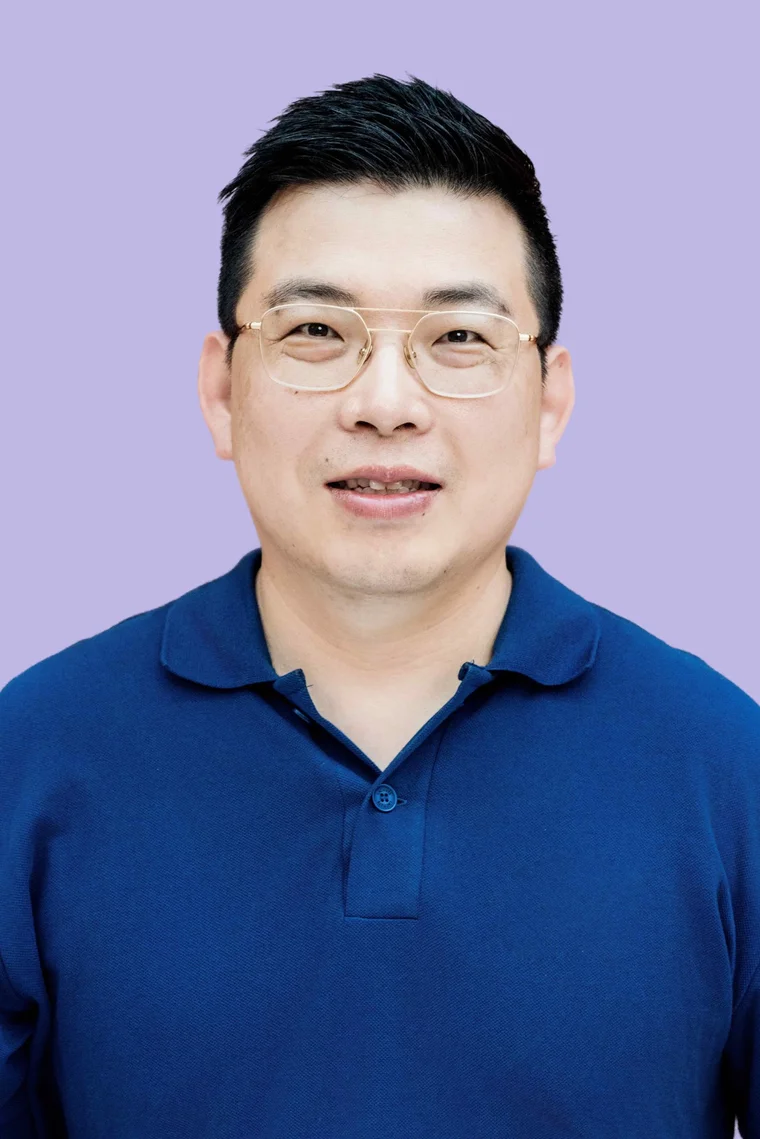
Music educator, facilitator and founder of The Elemental Lab.
My practice draws on 16 years of teaching in Korea and China, including primary music at Seoul Foreign School and primary performing arts at Nanjing International School. I work with schools, education offices and teacher networks to turn ideas into experiences that fit their classrooms.
IBEN
IB Educator Network (IBEN)
IB Primary Years Programme (PYP) Workshop Leader since 2025. I’ve facilitated the Category 1 workshop Building your IB programme: Primary years in Haikou and Suwon.
The Lab’s independent consulting is offered separately from official IB workshops.
These are tools I used to support discussion, collaborative planning and reflection in IB PYP professional learning. Participants could work in Korean, English or both and bring the ideas back to their schools.
Register once to try all six apps. Enter your name, workplace and email to get access on this browser.
01 / APP
Mission in Action
Table groups discuss a school scenario and point to evidence for how it reflects a stated mission. I use the app to make different interpretations visible before the whole-group conversation.
Teams use a fictional or de-identified learner story to identify a strength, name observable evidence and plan a next teaching move. The app keeps the discussion grounded in what a learner does and says.
A guided space for teams to draft a central idea, connect lines of inquiry to evidence of learning, and review language support and learning environments. Teams can export their draft for continued planning.
Participants compare transdisciplinary themes using sample unit scenarios. I ask groups to explain which theme best fits the conceptual focus and what could make another choice defensible.
Teachers test different conceptual lenses on the same scenario and consider how each lens changes the questions students could investigate. The self-study activities also support follow-up after a workshop.
Groups move furniture and learning resources on a digital floor plan, then explain how their choices could support inquiry, agency and inclusion. Each group can share and revisit its design.
Independent facilitation examples by JongBaek Yoon and The Elemental Lab. For official guidance and programme documents, use the International Baccalaureate’s own resources.
06 / WORK WITH THE LAB
Let’s make something together.
Tell me who you’re working with, what you’re curious about and what would be useful in your setting. Enquiries are welcome in English, Korean or Chinese.